
As I twirled the glossy sweet potato noodles around my fork, I couldn’t help but smile at the vibrant medley in my bowl — welcome to my kitchen’s take on Japchae, the much-loved Korean noodle dish! This recipe is a delightful marriage of texture and flavor, featuring chewy noodles, tender marinated beef, and a colorful array of fresh vegetables. Not only is it quick to prepare, making it a fantastic weeknight meal, but it’s also versatile enough to cater to your friends following vegetarian diets. Whether you’re serving it warm or at room temperature, Japchae is sure to revitalize your dinner routine. What’s your favorite twist on a classic noodle dish?
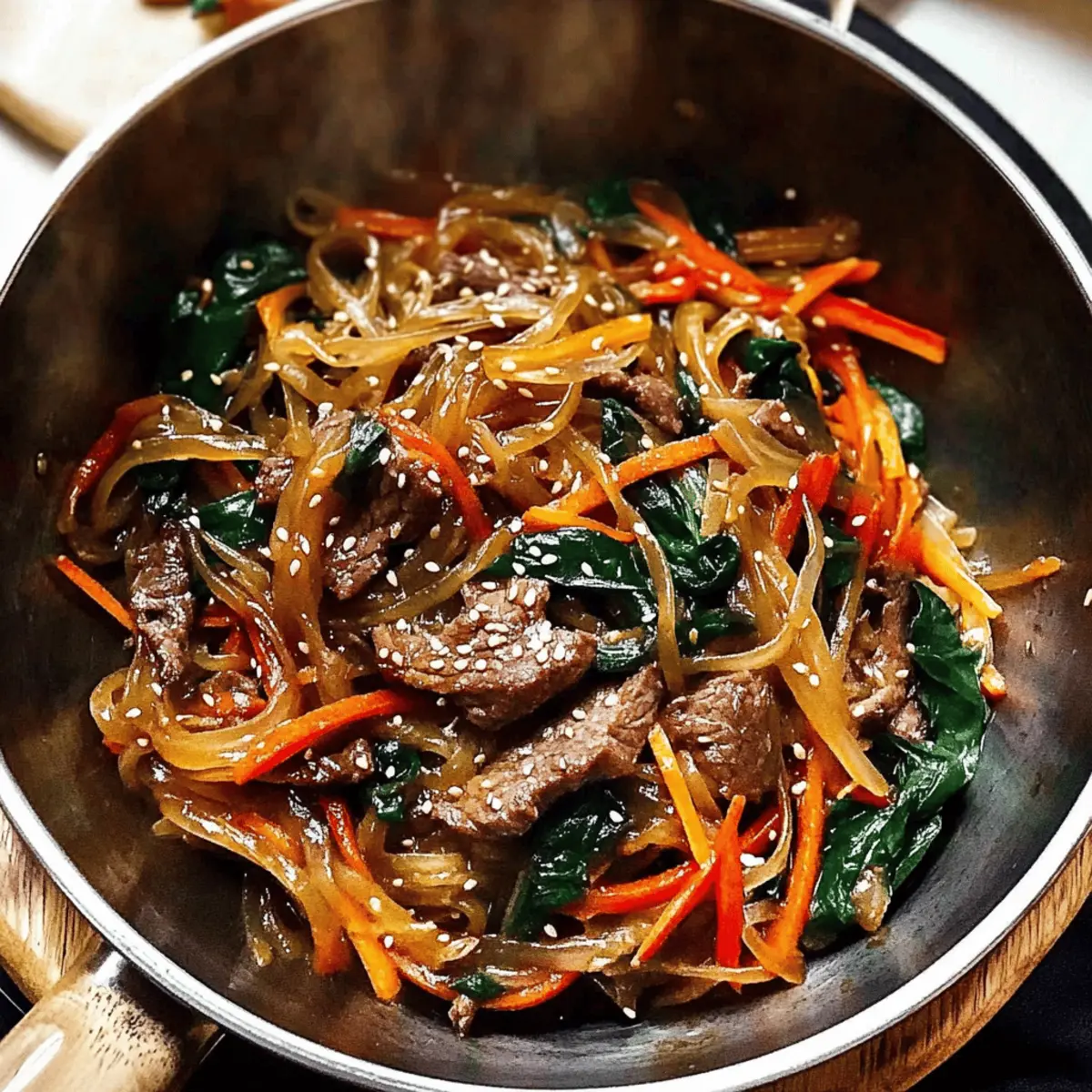
Why Is Japchae So Special?
Vibrant Flavors: Each bite of Japchae is a celebration of taste, blending the savory notes of marinated beef with the natural sweetness of vegetables.
Unique Texture: The ribbon-like sweet potato noodles provide a delightful, chewy experience, making this dish unlike any other noodle dish you’ve tasted.
Quick Preparation: Ready in under 30 minutes, it’s the perfect solution for busy weeknights while still impressing dinner guests.
Versatile Options: Whether you’re craving beef, looking for a vegetarian option, or want to include seasonal veggies, Japchae adapts beautifully to fit your preferences!
Crowd-Pleasing Appeal: This dish is sure to be a hit with family and friends, as it’s visually stunning and packed with flavor – a true feast for the senses. For more delicious Korean-inspired meals, check out my Gyeran Mari Korean and Tteokbokki Spicy Korean recipes!
Japchae Ingredients
For the Noodles
• Sweet Potato Noodles (Dangmyeon) – Provides that signature chewy texture; substitute with glass noodles or vermicelli if needed.
For the Protein
• Beef Short Ribs – Adds a juicy and flavorful protein source; can substitute with boneless beef short ribs, scotch fillet, or even tender cuts to suit your preference.
For the Sauce
• Soy Sauce – Essential for that umami flavor; use light or all-purpose soy sauce, and avoid dark soy sauce for balance.
• Sesame Oil – Contributes a rich flavor; opt for toasted sesame oil for extra depth.
• Sugar – Balances flavor and enhances the overall sauce complexion.
For the Vegetables
• Onion – Adds a sweet and savory base flavor; slice it thin for better cooking.
• Shiitake Mushrooms – Bring an earthy depth; feel free to substitute with regular mushrooms if shiitake are unavailable.
• Carrots – Provides sweetness and crunch; julienne for even cooking.
• Red Capsicum – Adds a pop of color and sweetness; you can swap it with yellow or orange bell peppers if desired.
• Baby Spinach – Offers nutritional value and a bright touch; use any leafy greens on hand.
• Green Onions – Perfect for garnish and additional flavor; use both white and green parts for best results.
For Cooking
• Cooking Oil – Essential for sautéing; any neutral oil works well, like vegetable or canola oil.
Step‑by‑Step Instructions for Japchae – Korean Noodles
Step 1: Prepare Beef
Begin by slicing the beef short ribs into thin strips, ensuring even cooking later. Marinate them for about 20 minutes in a mixture of soy sauce, sugar, minced garlic, and freshly cracked black pepper. This step infuses the meat with flavor and sets the stage for a delicious Japchae, enhancing its overall taste profile.
Step 2: Cook Noodles
While the beef marinates, bring a pot of water to a rapid boil. Add the sweet potato noodles and cook according to the package instructions, typically around 8 minutes, until they are visibly soft and chewy. Drain the noodles and rinse them under cold water to stop the cooking process, then set them aside for later incorporation into your Japchae.
Step 3: Mix Sauce
In a large mixing bowl, combine soy sauce, sugar, minced garlic, sesame oil, and a pinch of salt. Whisk these ingredients together to create a glossy sauce that will coat the noodles beautifully. This step ensures the flavors are well blended and absorbed when you add the noodles and vegetables, making your Japchae irresistibly delicious.
Step 4: Cook Vegetables
Heat a large skillet or wok over medium-high heat and add a tablespoon of cooking oil. Start by sautéing the sliced onions and shiitake mushrooms until they soften, about 3-4 minutes. Next, introduce the julienned carrots and red capsicum, cooking for an additional 2-3 minutes until they brighten in color. Finally, add the baby spinach, cooking just until it wilts, approximately 1 minute, before transferring everything to the bowl with the noodles.
Step 5: Cook Beef
In the same skillet, add a touch more oil if needed, and increase the heat to high. Quickly sear the marinated beef strips for about 90 seconds, stirring constantly until they’re just cooked through and browned. This rapid cooking technique locks in the juices and tenderness of the beef, making it a perfect addition to your Japchae.
Step 6: Combine
Return to the bowl containing the noodles and vegetables, and add the cooked beef. Gently toss everything together, ensuring the sauce thoroughly coats the noodles, vegetables, and beef. This cohesive blend will showcase the flavors and textures of the Japchae, creating a vibrant and appealing dish. Sprinkle sesame seeds on top just before serving for an added crunch and visual flair.
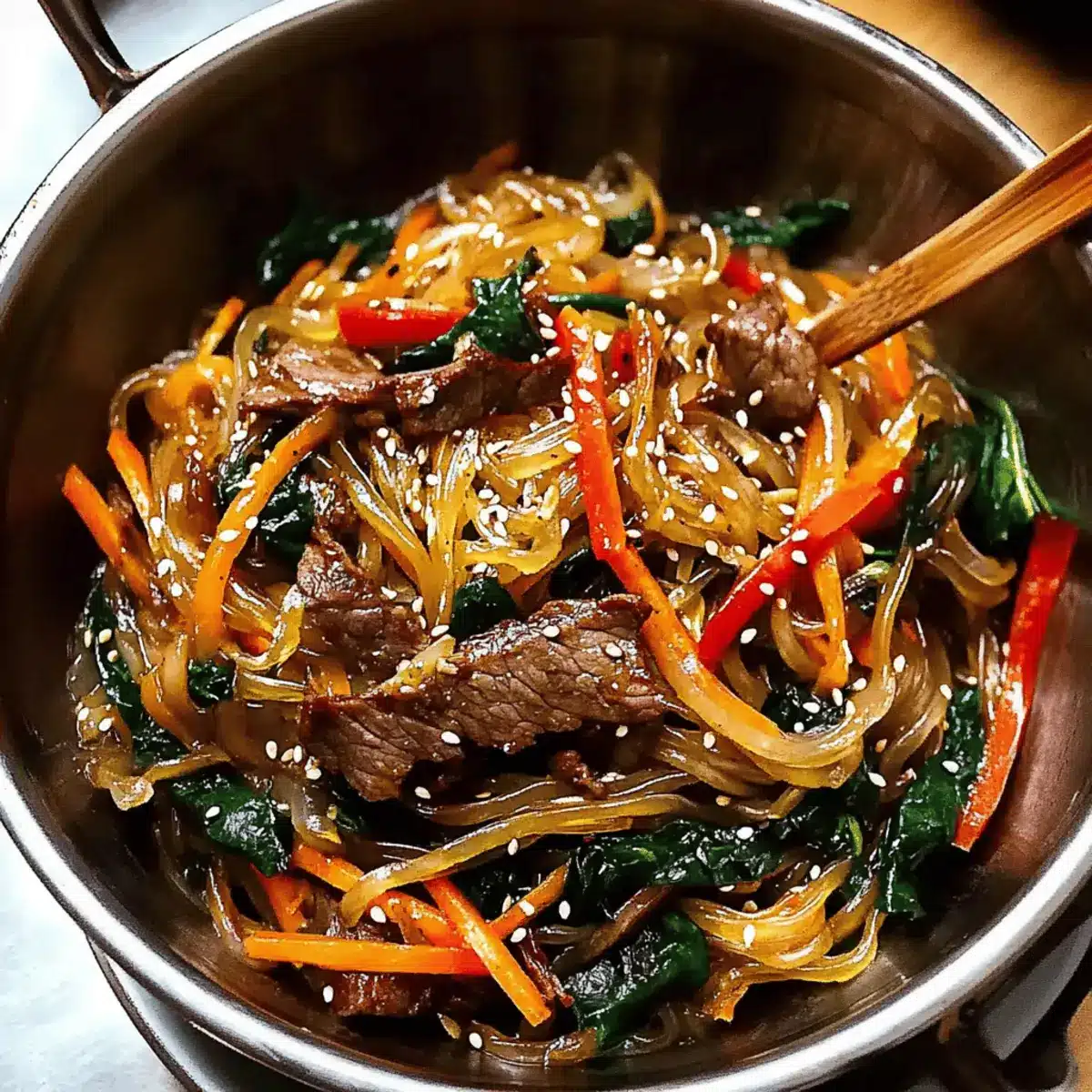
Make Ahead Options
These delicious Japchae noodles are perfect for meal prep enthusiasts! You can marinate the beef and cook the sweet potato noodles up to 24 hours in advance, which not only saves time but also allows the flavors to meld beautifully. Simply refrigerate the marinated beef in an airtight container and store the cooked noodles separately to maintain their texture. You can also sauté the vegetables and let them cool before combining with the noodles and beef when you’re ready to serve. When you’re set to enjoy your meal, just toss everything together and heat lightly in a pan for a quick, satisfying meal—just as delicious and vibrant even when prepped ahead!
What to Serve with Authentic Japchae
Pairing Japchae with delightful side dishes elevates your meal, bringing various flavors and textures to the table.
-
Kimchi: This tangy, fermented dish adds a spicy kick, perfectly balancing the richness of the savory Japchae. It introduces a probiotic element to aid digestion and keeps your meal light and fresh.
-
Crispy Korean Fried Chicken: Indulge in crunchy, flavorful chicken that pairs beautifully with the chewy noodles. The contrasting textures highlight each dish’s uniqueness and create an unforgettable dining experience.
-
Korean Potato Salad: Creamy and mildly sweet, this side dish complements the savory notes of Japchae while adding a smooth finish to your meal, perfect for those craving comfort food.
-
Steamed Broccoli: Adding a vibrant touch, steamed broccoli contributes a fresh crunch to your plate. It retains its bright color and nutrients while enhancing the dish with a mild bitterness.
-
Spicy Dipping Sauce: Create a zesty mix of soy sauce, chili paste, and sesame oil. This sauce can elevate the entire meal, adding a new layer of flavor that enhances every bite of Japchae.
-
Sesame Seed Rice: A bowl of lightly seasoned rice topped with sesame seeds can serve as a mellow base that counterbalances the strong flavors of your Japchae, creating a satisfying harmony of tastes.
-
Refreshing Cucumber Salad: Crisp and light, this salad introduces a soothing freshness to your meal. The acidity cuts through the dish’s richness, making every bite of Japchae feel even more satisfying.
-
Iced Peach Tea: Pair your Japchae with a refreshing iced peach tea. Its natural sweetness and fruity undertones perfectly complement the savory flavors of the dish, refreshing your palate with each sip.
-
Chocolate Mochi: For dessert, treat yourself to soft chocolate mochi; it’s a delightful way to round out your meal with a sweet, chewy finish that beautifully contrasts the savory Japchae.
Japchae Variations & Substitutions
Feel free to let your creativity shine as you customize your Japchae experience with these delightful twists!
-
Vegetarian Delight: Replace the beef with tofu and increase the variety of vegetables for a hearty plant-based meal. Think colorful bell peppers, zucchini, or even a handful of crunchy bean sprouts for added crunch.
-
Spicy Kick: Add sliced fresh chili or a drizzle of sriracha to the sauce for a spicy flavor boost. This elevates the dish, making it exciting and vibrant!
-
Savory Mushrooms: Swap shiitake mushrooms for king oyster or oyster mushrooms if you desire a different earthy flavor and texture. Each mushroom brings its unique style to the dish, enhancing the overall taste.
-
Nutty Flavor: Sprinkle toasted sesame seeds or chopped peanuts on top just before serving for an added crunch and depth of flavor. It’s a simple elevation that adds both visual appeal and that satisfying crunch!
-
Seasonal Veggies: Feel free to use whatever vegetables you have on hand! Broccoli florets, snap peas, or asparagus can be perfect seasonal additions that also provide vibrant color and nutrition.
-
Noodle Alternatives: If sweet potato noodles aren’t available, try using udon or rice noodles instead. They will offer a different but delightful texture while still absorbing the delicious sauce.
-
Fruit Infusion: For a surprising twist, add pineapple or mandarin segments for a sweet and tangy contrast to the savory elements. This unexpected flavor pairing can brighten up the whole dish.
-
Herbaceous Touch: Consider adding fresh herbs like cilantro or Thai basil at the end for a fresh aroma and bright flavor. This will take your Japchae to another level of deliciousness!
Feel inspired to explore these variations, and remember, every twist adds your personal touch to this beloved dish! For more culinary ideas, don’t forget to check out my tasty Gyeran Mari Korean and Tteokbokki Spicy Korean recipes!
Storage Tips for Japchae
Fridge: Store leftovers in an airtight container for up to 3 days. The texture improves when served at room temperature, making it a perfect cold noodle salad option.
Reheating: If you prefer to enjoy Japchae warm, gently reheat in a skillet over low heat, adding a splash of water to maintain moisture. Avoid microwaving, as it can make the noodles gummy.
Freezer: Not suitable for freezing, as the texture of sweet potato noodles tends to become watery and mushy upon thawing, negatively affecting your favorite dish.
Expert Tips for Japchae
• Thinly Slice Beef: Cutting the beef into thin strips helps it cook quickly and evenly, preventing it from becoming tough. Always marinate for flavor enhancement.
• Don’t Overcook Vegetables: Overcrowding the pan can lead to mushy veggies. Cook in batches to retain their vibrant colors and textures—keep them crisp!
• Correct Noodle Cooking: Follow the package instructions for sweet potato noodles closely, rinsing them in cold water afterward to halt the cooking process, ensuring the perfect chew.
• Mix Well: For even flavor distribution in your Japchae, mix all ingredients thoroughly in a large bowl. This ensures every noodle is coated with that delicious sauce.
• Storage Strategy: Leftovers can be refrigerated for up to 3 days. Enjoy them cold as a refreshing salad or lightly reheated—keeping the noodle structure intact!
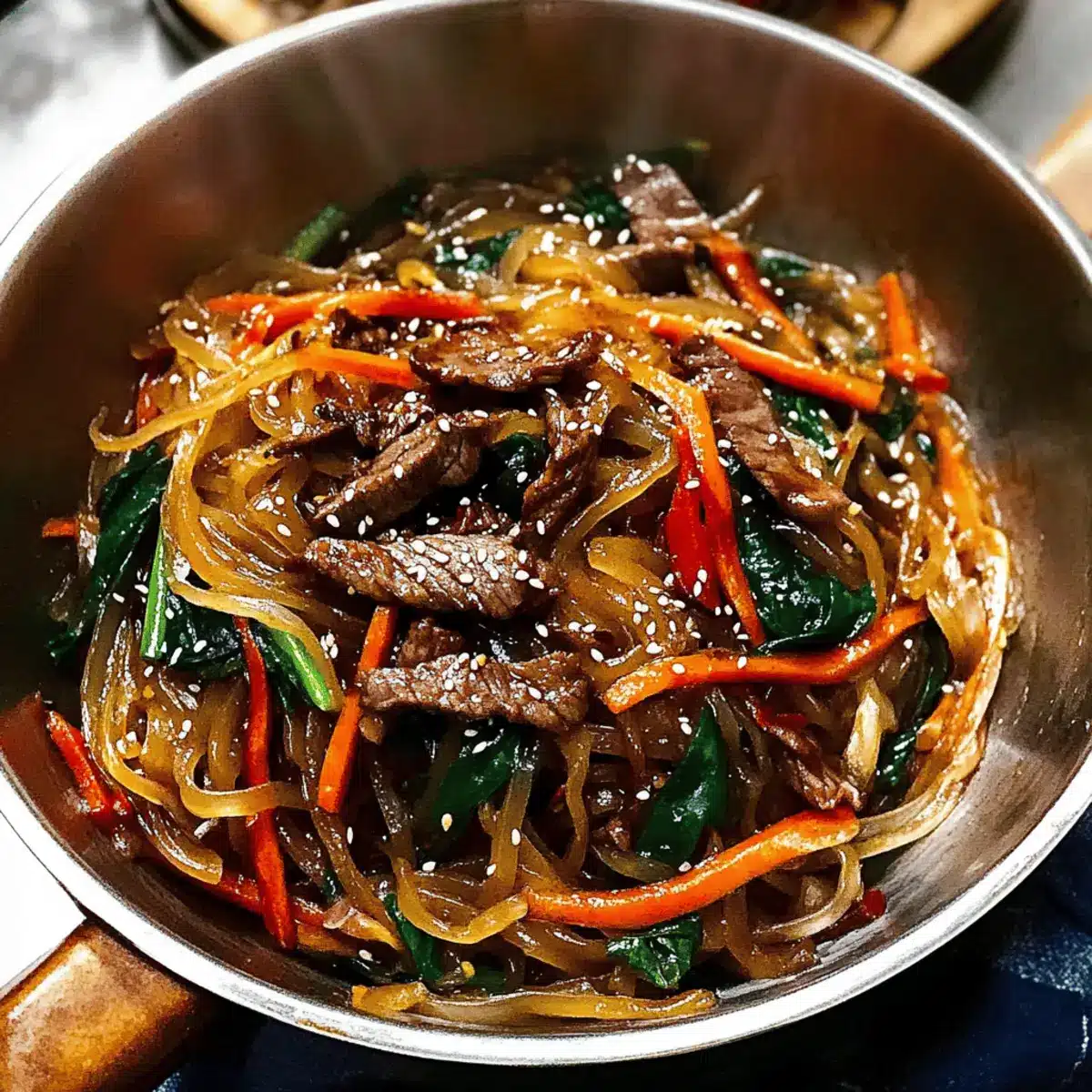
Japchae (Korean Noodle Dish) Recipe FAQs
What type of sweet potato noodles should I use for Japchae?
Absolutely! For Japchae, it’s essential to use sweet potato noodles, also known as Dangmyeon, as they provide that signature chewy texture. If you can’t find them, don’t worry! You can substitute them with glass noodles or vermicelli, but keep in mind that the flavor and texture will differ slightly.
How long can I store leftover Japchae in the fridge?
You can store your delicious leftovers in an airtight container in the fridge for up to 3 days. I often find that the flavors meld beautifully overnight, making it even more enjoyable! It’s best served at room temperature, but if you prefer it warm, gently reheat it on the stove with a splash of water to avoid drying out.
Can I freeze Japchae?
While Japchae is a wonderful dish, I wouldn’t recommend freezing it. The sweet potato noodles tend to become watery and mushy when thawed, which can negatively impact the overall texture and taste of your beloved dish. It’s best enjoyed fresh or refrigerated for a few days!
What should I do if my noodles are sticky?
If your sweet potato noodles end up sticky after cooking, don’t worry—this can happen sometimes. To remedy this, simply rinse the cooked noodles under cold water to stop the cooking process, which will also help separate them. Toss them with a little oil to keep them glossy and prevent sticking before mixing them with the sauce and vegetables.
Is Japchae suitable for people with dietary restrictions?
Very! The beauty of Japchae lies in its versatility. If you’re cooking for someone who is vegetarian, simply omit the beef and increase the variety of vegetables used. This dish is naturally gluten-free if you use gluten-free soy sauce or tamari. Just be sure to check all ingredient labels for dietary restrictions related to allergies.
How can I enhance the flavor of my Japchae?
To elevate your Japchae, try incorporating additional ingredients! Add a splash of citrus juice for brightness or toss in some sesame seeds for a nutty crunch. You could even introduce fermented flavors by adding a bit of kimchi. These variations not only enhance flavor but also bring a personal touch to your dish.
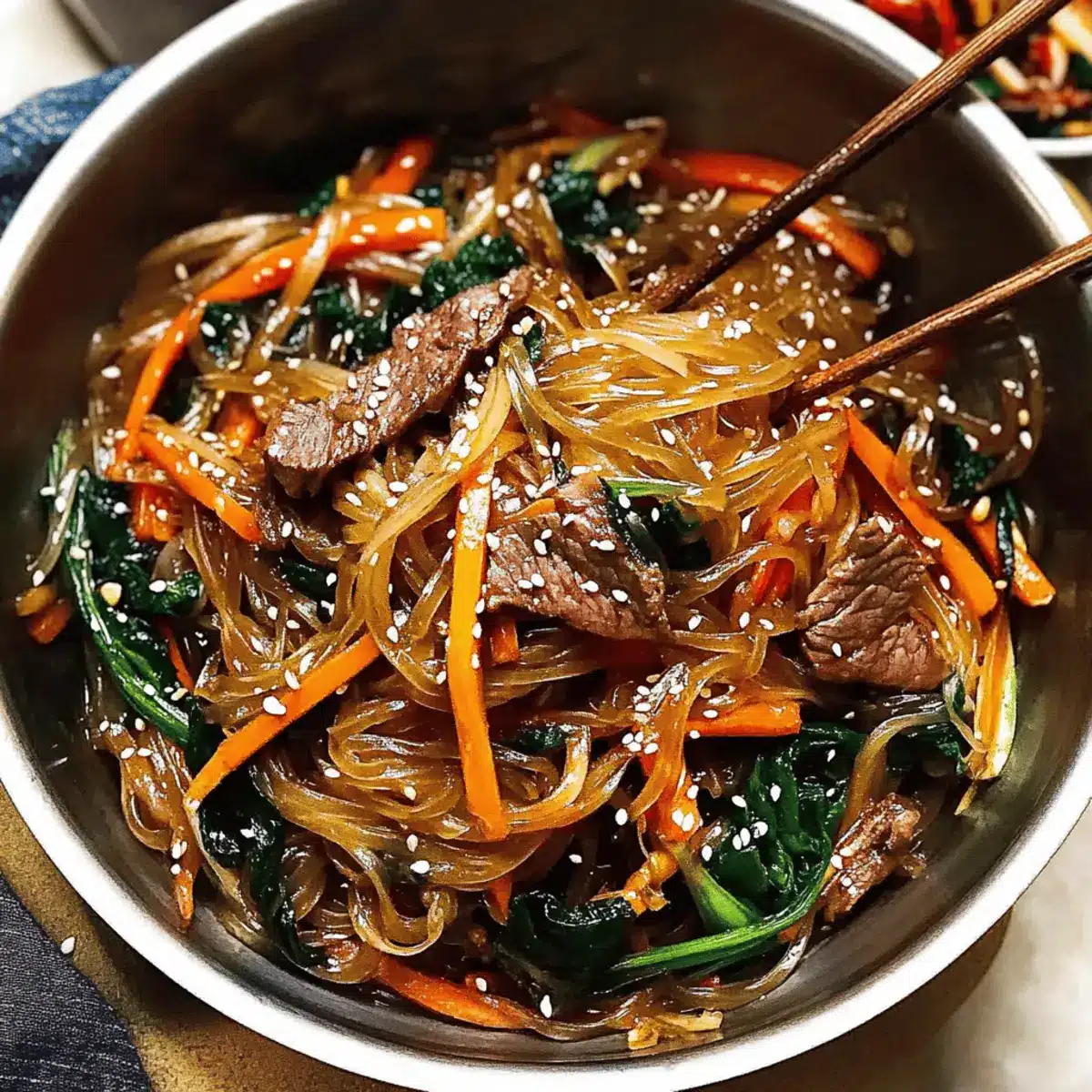
Japchae – Korean Noodles Bursting with Flavor and Color
Ingredients
Equipment
Method
- Begin by slicing the beef short ribs into thin strips and marinate for about 20 minutes in a mixture of soy sauce, sugar, minced garlic, and black pepper.
- Bring a pot of water to a boil and cook the sweet potato noodles according to package instructions, about 8 minutes. Drain and rinse under cold water.
- In a large mixing bowl, combine soy sauce, sugar, garlic, sesame oil, and salt. Whisk together.
- Heat a skillet over medium-high heat and sauté onions and shiitake mushrooms for 3-4 minutes, then add carrots and red capsicum for another 2-3 minutes. Add spinach until just wilted.
- In the same skillet, sear the marinated beef strips on high heat for about 90 seconds.
- Combine noodles, vegetables, and beef in the large bowl, mixing gently to coat everything with the sauce.
Leave a Reply