
As I whisked together the vibrant, spicy nuances of ssamjang with creamy pasta, the kitchen became a playground for the senses. What emerged was my latest culinary adventure: Creamy Korean Ssamjang Pasta. This dish combines the rich umami flavors of succulent pork belly with the comforting embrace of pasta, creating a delightful fusion that’s both satisfying and quick to prepare. With just a few ingredients, including the savory kick of ssamjang, this recipe is a fantastic crowd-pleaser that’s perfect for weeknight dinners or casual gatherings. Imagine diving into a bowl of creamy goodness topped with a runny egg and fresh green onions—each bite is a delicious journey to comfort. Ready to tantalize your taste buds and upgrade your dinner routine? Let’s dive into the world of Creamy Korean Ssamjang Pasta!
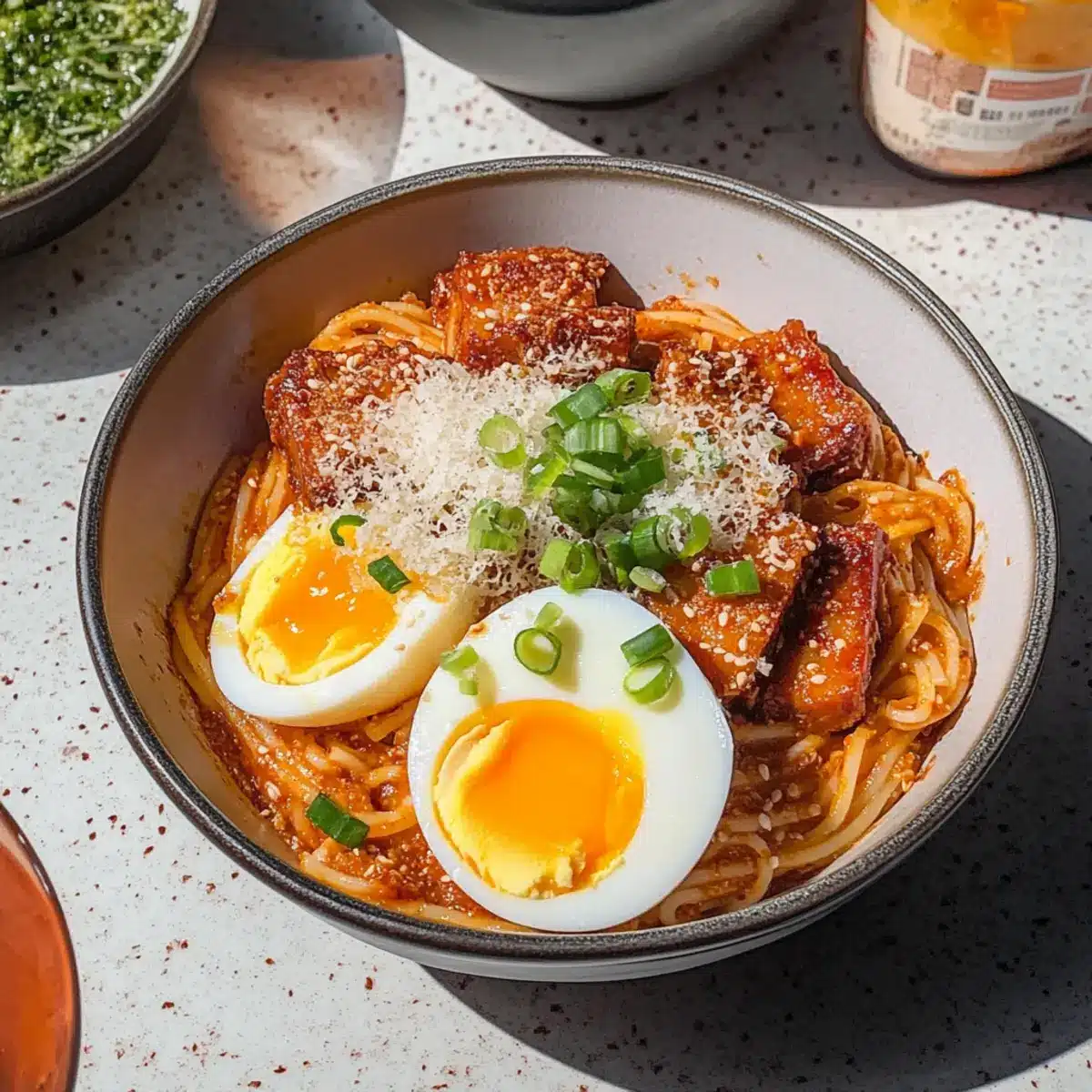
Why will you crave this pasta dish?
Umami Explosion: This Creamy Korean Ssamjang Pasta is a flavor bomb, combining the richness of pork belly with the spicy essence of ssamjang—each bite is an experience.
Quick and Easy: In just 30 minutes, you can whip up this culinary masterpiece, perfect for those busy weeknights!
Flexible Ingredients: Swap out pork belly for chicken or tofu to suit your diet, ensuring everyone can enjoy.
Crowd-Pleasing: Your family and friends will be raving about this dish—it’s the ultimate comfort food that guarantees smiles!
Versatile Base: Just like Lemon Zucchini Pasta or Spinach Mushroom Pasta, this pasta allows for endless variations, making it ideal for creativity in the kitchen.
Creamy Korean Ssamjang Pasta Ingredients
For the Pasta
• Pasta – The sturdy base that brings comfort and structure to this dish.
For the Sauce
• Pork Belly – Rich and savory; adds a satisfying depth of flavor.
• Ssamjang (쌈장) – This crucial ingredient brings umami, garlic, and spice; feel free to substitute with gochujang for a different kick.
• Garlic – Fresh is best for maximum aroma and depth.
• Onion – Sweetness complements the spice; shallots work as a milder swap.
For the Finishing Touches
• Parmesan Cheese – Adds a creamy, salty finish; for a vegan option, try nutritional yeast.
• Egg – Enhances richness; a soft-boiled egg offers a luscious texture.
• Green Onions – Adds a fresh crunch; chives can also be used as an alternative.
This delightful mix of ingredients is all set to help you whip up your own Creamy Korean Ssamjang Pasta, creating a plateful of umami delight in no time!
Step‑by‑Step Instructions for Creamy Korean Ssamjang Pasta
Step 1: Cook the Pasta
Begin by bringing a large pot of salted water to a rolling boil. Add your pasta of choice and cook according to the package instructions, usually around 8-12 minutes, until al dente. Stir occasionally to prevent sticking, and remember to reserve 1 cup of the pasta water before draining. This step is essential for perfectly creamy Korean Ssamjang Pasta.
Step 2: Prepare the Pork Belly
While the pasta cooks, heat a skillet over medium-high heat. Add diced pork belly and cook for about 6-8 minutes, turning occasionally until it’s golden brown and crispy. Once cooked, remove the pork from the skillet and set it aside on a plate lined with paper towels to absorb any excess fat, allowing its rich flavors to enhance your creamy sauce.
Step 3: Sauté Aromatics
In the same skillet used for the pork, lower the heat to medium and add minced garlic and diced onion. Sauté for about 2-3 minutes until fragrant and the onion becomes translucent. Stir occasionally to ensure even cooking, creating a savory base that enriches the flavor profile of your Creamy Korean Ssamjang Pasta.
Step 4: Add Ssamjang
Once your aromatics are nicely browned, stir in the ssamjang. Cook for another minute, stirring continuously to combine the flavors and allow the garlic and onion to soak up that umami-packed essence. This step is crucial as it transforms your sautéed mix into a luscious sauce that will coat the pasta beautifully.
Step 5: Combine Pasta and Sauce
Next, add the drained pasta to the skillet, along with the reserved pasta water and the crispy pork belly. Toss everything together gently over low heat for about 2-3 minutes, mixing until the pasta is well-coated with the ssamjang sauce. The warmth will help the ingredients meld, ensuring each bite of Creamy Korean Ssamjang Pasta bursts with flavor.
Step 6: Serve with Garnishes
To finish your dish, serve the Korean Ssamjang Pasta warm, topping each portion with grated parmesan cheese, a soft-boiled egg, and a sprinkle of chopped green onions. The creamy cheese and runny egg will add richness and a delightful texture while the fresh green onions provide a crunchy contrast. Enjoy your culinary creation!
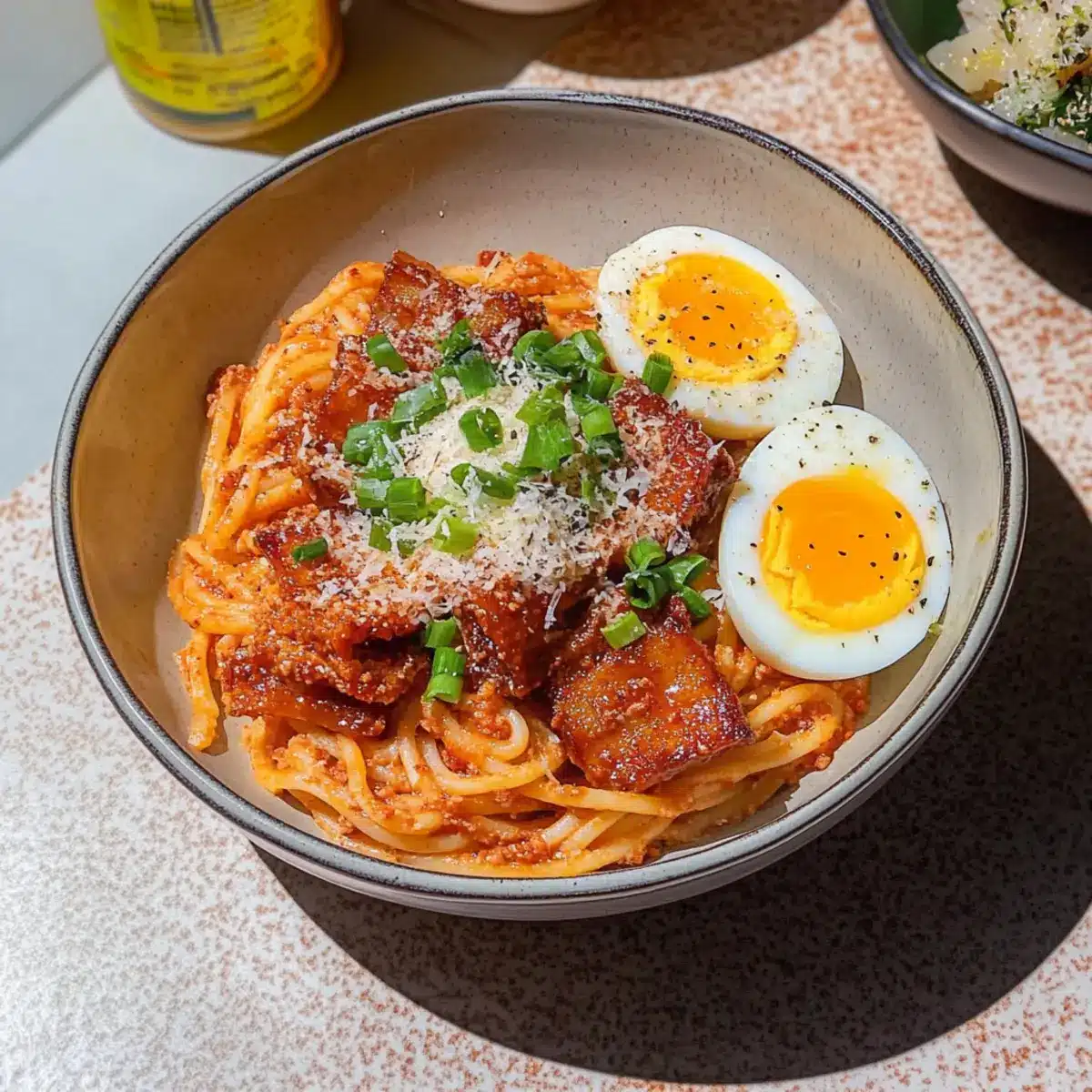
What to Serve with Creamy Korean Ssamjang Pasta
Set the stage for a memorable meal with vibrant sides and flavors that elevate your dining experience.
- Garlic Bread: The crispy, buttery goodness of garlic bread perfectly balances the creaminess of the pasta, making each bite a joy.
- Asian-style Cucumber Salad: A refreshing contrast, this salad brings a crunchiness that cuts through the richness of the ssamjang pasta.
- Steamed Edamame: These salty and nutritious little bites add a fun, pop-in-your-mouth element, enhancing the overall flavor profile.
- Savory Miso Soup: A bowl of warm miso soup complements the umami flavor of the pasta, providing a cozy, heartwarming addition to your meal.
- Vegetable Stir-fry: A vibrant medley of colorful vegetables stir-fried with soy sauce not only adds freshness but also encourages a wholesome balance.
- Chilled Green Tea: For a refreshing drink option, chilled green tea cleanses the palate, making it an ideal companion for this umami-rich pasta.
- Mochi Ice Cream: End on a sweet note with creamy mochi ice cream for dessert, offering a delightful contrast to the savory flavors of your meal.
Creamy Korean Ssamjang Pasta Variations
Feel free to get creative with your Creamy Korean Ssamjang Pasta—there’s plenty of room for customization to make it your own!
-
Protein Swap: Replace pork belly with chicken or tofu for a lighter dish that’s just as satisfying. Both options soak up the sauce beautifully, providing a different but delicious taste.
-
Spicy Twist: Use gochujang instead of ssamjang for an extra kick! The heat from gochujang will bring a fiery element to the creamy sauce, enhancing the overall flavor profile.
-
Veggie Addition: Toss in some spinach or mushrooms for added nutrition and texture. These vegetables will not only make your dish healthier but also elevate the umami experience in each bite.
-
Cheese Variation: Try feta or cream cheese instead of parmesan for a tangy twist. These cheeses will add a creamy layer that complements the savory flavors of the dish beautifully.
-
Gluten-Free Option: Use zucchini noodles or gluten-free pasta if you’re looking for a lighter, gluten-free alternative. These substitutions keep the dish light while still delivering delicious taste.
-
Herb Infusion: Sprinkle in some basil or cilantro for a refreshing herbaceous touch at the end. Fresh herbs brighten the dish and add another layer of flavor that elevates the experience.
-
Nutty Flavor Boost: Add a handful of toasted sesame seeds or crushed peanuts for a delightful crunch. This not only enhances the texture but also introduces a nutty flavor that pairs well with the creamy sauce.
For more delightful pasta ideas, be sure to check out Mushroom Gruyere Pasta or Easy Tteokbokki Spicy Korean for further inspiration!
Make Ahead Options
These Creamy Korean Ssamjang Pasta preparations are a lifesaver for busy home cooks! You can cook the pasta and prepare the ssamjang sauce up to 24 hours in advance; simply store the cooked pasta in a covered container in the refrigerator and toss it with a splash of olive oil to prevent sticking. Keep the sauce in a separate airtight container. When ready to enjoy, gently reheat the sauce in a skillet over medium heat, add the pasta (along with a bit of reserved pasta water if needed), and toss to combine until heated through. This approach ensures your meal is just as delicious without the hassle during busy weeknights!
Expert Tips for Creamy Korean Ssamjang Pasta
• Save Pasta Water: Always reserve some pasta water before draining; it’s essential for adjusting the sauce’s creaminess.
• Don’t Rinse Pasta: Avoid rinsing after cooking; this removes the starch needed for the sauce to cling beautifully to your Creamy Korean Ssamjang Pasta.
• Fresh Ingredients: Opt for fresh garlic and onions for the best aromatic depth in your dish—dried versions lack in flavor intensity.
• Adjust Spiciness: Start with a smaller amount of ssamjang; you can always add more based on your heat tolerance and preference for umami flavor.
• Cook Pork Belly Well: Ensure the pork belly is crispy; it not only enhances the texture but also adds a delightful crunch against the creamy sauce.
Storage Tips for Creamy Korean Ssamjang Pasta
Room Temperature: It’s best to avoid leaving Creamy Korean Ssamjang Pasta out for more than 2 hours to prevent bacterial growth.
Fridge: Store leftovers in an airtight container for up to 2 days. Reheat gently on the stovetop, adding a splash of reserved pasta water to maintain creaminess.
Freezer: Although this dish tastes freshest when made fresh, you can freeze it for up to 1 month. Thaw overnight in the fridge before reheating.
Reheating: Gently reheat on the stovetop over low heat, stirring occasionally. Add a little reserved pasta water if needed to regain creaminess.
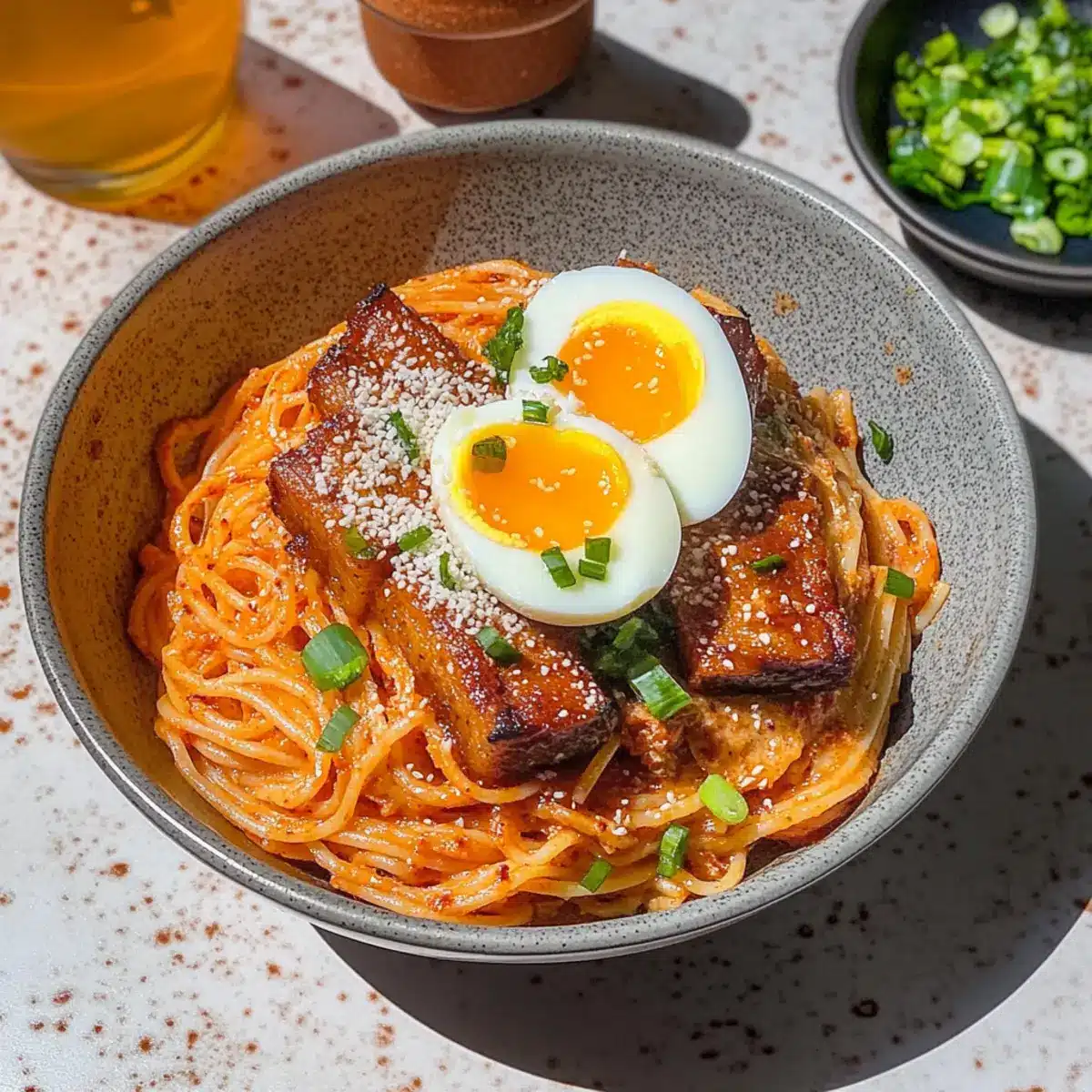
Creamy Korean Ssamjang Pasta Recipe FAQs
What kind of pasta should I use for this recipe?
You can use any type of pasta you love, but I recommend something sturdy like spaghetti or linguine. These shapes hold up well against the creamy sauce and ingredients, ensuring each bite delivers a satisfying mouthful.
How do I know if my ssamjang is fresh enough to use?
Check your ssamjang for any dark spots or an off smell. Fresh ssamjang should have a bright color and a strong, engaging aroma. If it’s been sitting in your pantry for over a year, it’s best to get a new jar to ensure maximum flavor in your Creamy Korean Ssamjang Pasta.
What are the storage tips for Creamy Korean Ssamjang Pasta?
Store any leftovers in an airtight container in the refrigerator for up to 2 days. When you’re ready to eat, reheat gently on the stovetop, adding a splash of reserved pasta water to restore that creamy texture. If you want to freeze it, place it in a freezer-safe container for up to 1 month and thaw overnight in the fridge before reheating.
Can I make this dish without pork belly?
Absolutely! You can substitute pork belly with chicken or tofu for a lighter option. For chicken, cook it until fully browned and tender. If using tofu, opt for firm tofu to maintain its structure while stirring. This way, everyone can enjoy this delightful Creamy Korean Ssamjang Pasta!
How do I adjust the spice level?
If you’re concerned about the heat from ssamjang, start with a smaller amount, maybe about 1 tablespoon, and mix it into your sautéed garlic and onion. Taste as you go, and feel free to add more if you’re ready for a bigger kick. Remember, you can always add more, but it’s hard to dial it back once it’s in the dish!
What can I do if my sauce turns out too thick?
If your sauce becomes too thick, don’t worry! Simply add a little of the reserved pasta water, one tablespoon at a time, while mixing it into the pasta until you reach your desired creaminess. This method will ensure your Creamy Korean Ssamjang Pasta remains luscious and delightful!
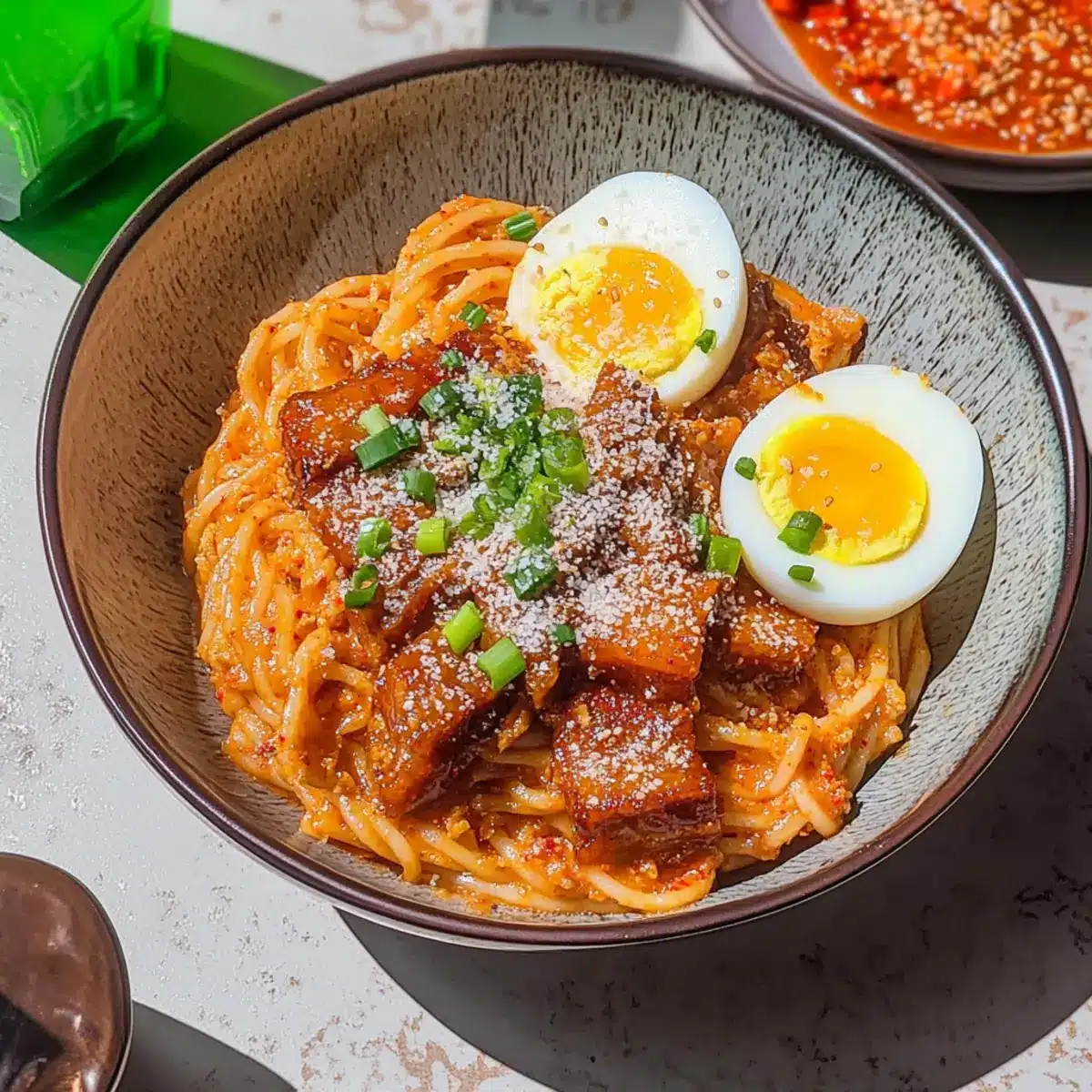
Creamy Korean Ssamjang Pasta: A Savory Umami Experience
Ingredients
Equipment
Method
- Cook the pasta in salted boiling water until al dente; reserve 1 cup of pasta water before draining.
- In a skillet, cook diced pork belly over medium-high heat until golden brown and crispy, about 6-8 minutes.
- Sauté minced garlic and diced onion in the same skillet until fragrant, about 2-3 minutes.
- Stir in ssamjang and cook for another minute to combine flavors.
- Add drained pasta, reserved pasta water, and cooked pork belly to the skillet; toss to coat evenly.
- Serve with grated parmesan cheese, a soft-boiled egg, and chopped green onions on top.
Leave a Reply